
Grill Knobs: Types, Problems & Replacement
A cracked, melted, or stripped grill knob is more than cosmetic. It affects heat control, cooking accuracy, and in some cases whether you can shut the gas off reliably. Here's everything you need to know.
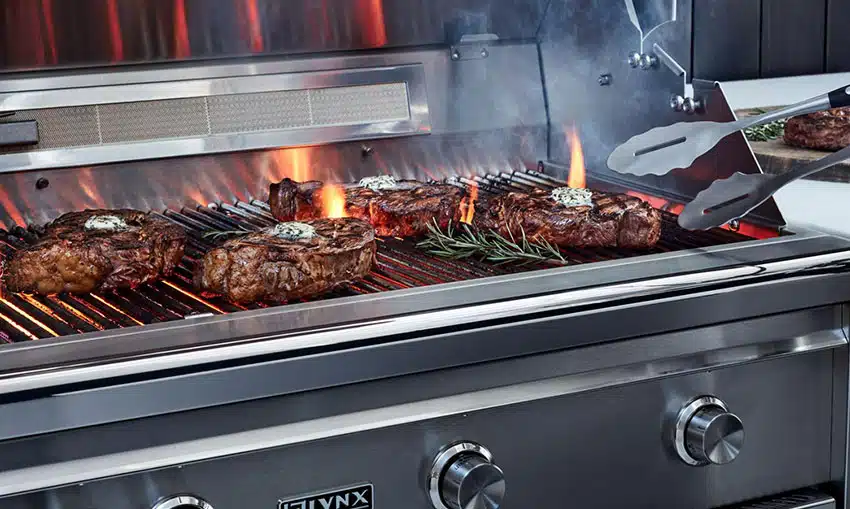
Grill Knobs Are Touched Every Single Time You Cook
Of all the components on a gas grill, the control knobs are the ones you interact with most directly — every cookout, multiple times per session. They control how hot each burner runs, whether the grill lights at all on grills with integrated push-to-ignite knobs, and critically, whether the gas actually shuts off completely when cooking is done.
Because of that, a knob that is cracked, melted, seized, or stripped is not just a cosmetic problem. It affects your ability to control heat accurately, your ability to light the grill reliably, and your ability to shut it off confidently. We replace grill knobs as part of our grill repair service throughout Southern California — and it is one of the most straightforward repairs we perform, provided the correct replacement knob is identified for the specific brand and model.
If you prefer to source and install your own replacement knobs, store.progrill.com carries grill knobs for a wide range of brands and models — including many older and discontinued grills where original equipment parts are no longer available through the manufacturer.
Types of Grill Control Knobs
Not all grill knobs are the same — and a replacement knob that fits the valve stem of one brand will not necessarily fit another. Understanding what type of knob your grill uses is the starting point for finding the correct replacement.
Standard Valve Knobs
The most common knob type — a plastic or metal knob that mounts directly onto the valve stem and turns to open and close gas flow to the burner. These knobs connect to the valve via a D-shaped, round, or splined shaft profile that varies by brand and model. Fitting the correct internal shaft profile is the most important factor in knob replacement — a knob that does not grip the valve stem securely will spin without turning the valve underneath it, which makes it impossible to control heat or shut off gas reliably.
Push-to-Ignite Knobs
Found on grills with integrated ignition, push-to-ignite knobs combine the gas valve control with the ignition trigger in a single component — you push the knob inward while turning to the ignite position to activate the electrode. These are more complex than standard valve knobs and more expensive to replace, because the ignition mechanism is built into the knob itself. A failed push-to-ignite knob often presents as an ignition problem rather than a knob problem — the valve function may be fine but the ignition trigger inside the knob has failed.
Infinite Control Knobs
Premium built-in grills from brands like Lynx and DCS use infinite control valves that allow precise heat adjustment across a continuous range rather than the discrete low-medium-high positions of standard consumer valves. The knobs for these systems are designed to specific tolerances and must be replaced with the correct OEM or compatible part to maintain that precise control. Generic aftermarket knobs frequently do not provide the same feel or accuracy on infinite control systems.
Side Burner Knobs
Outdoor kitchens and many higher-end freestanding grills include side burners — wok burners, power burners, or rotisserie burners — with their own dedicated control knobs. Side burner knobs are frequently a different style or profile from the main grill knobs on the same unit, and replacement requires identifying the correct part for the specific burner rather than assuming it matches the main grill controls.
Smoker Box & Specialty Knobs
Grills with integrated smoker boxes, rear infrared burners, or warming zones have additional control knobs beyond the standard burner controls. These are often smaller or differently styled than the main burner knobs and are just as subject to cracking, melting, and UV degradation — but are more commonly overlooked during replacement because they are less frequently used.
Metal vs. Plastic Knobs
Most consumer-grade grills ship with plastic knobs that are more susceptible to heat damage, UV degradation, and cracking over time. Premium brands typically use stainless steel, aluminum, or high-grade composite knobs that are significantly more durable. When replacing plastic knobs on a grill that will continue to see regular use, upgrading to a metal or composite replacement — where compatible — is often worth the modest additional cost. Check store.progrill.com for upgrade options for your specific model.
Why Grill Knobs Fail — and What Each Problem Means
Cracking & UV Degradation
Plastic grill knobs exposed to Southern California's intense UV are subject to significant degradation over time — the plastic becomes brittle, surface cracking appears, and eventually the knob cracks through entirely, either during normal use or when any lateral force is applied. Cracked knobs should be replaced promptly because a knob that fractures completely during cooking can leave the valve in an unintended position and make it difficult to shut the gas off. UV-resistant or metal replacement knobs extend the replacement interval considerably.
Heat Melting & Warping
Knobs positioned close to burner areas, side burners, or where grease fires have occurred can melt, warp, or soften to the point where they no longer turn accurately. A knob that has been partially melted may feel like it turns when it is not actually engaging the valve stem correctly, or it may stick in position. Heat-damaged knobs require replacement — there is no restoration for melted plastic or warped composite material.
Stripped Internal Shaft
The most functionally serious knob failure — the internal shaft profile that grips the valve stem has worn smooth through repeated use, and the knob now spins freely without turning the valve. This is most common on grills used very frequently or where knobs have been overtightened, and it can be difficult to identify because the knob still feels like it is working but the burner does not respond to adjustment. A knob that turns but does not change the flame is almost always a stripped shaft rather than a valve problem.
Seized or Difficult to Turn
Knobs that have become difficult or impossible to turn smoothly may indicate either a knob problem — warped plastic that has expanded against the control panel — or an underlying valve problem where the valve stem itself has seized. Distinguishing between the two requires removing the knob to test whether the valve stem turns freely without it. If the stem turns freely but the knob is difficult, the knob is the issue. If the stem itself is seized, the problem is the valve.
Missing or Broken Indicator Markings
Control knobs have position markings — off, low, medium, high — that tell you where the valve is set. When these markings wear off, fade, or the knob is replaced with one that has different markings from the original, consistent heat control becomes difficult. Cooking at the same heat setting reliably requires knowing where the knob is positioned, and a knob with missing markings forces guesswork. This is more than a cosmetic issue for anyone who cooks seriously on their grill.
Knob Won't Stay in Position
A knob that does not have enough resistance to stay in a set position — drifting from medium toward low during cooking — is either worn internally or has a valve whose detent mechanism has failed. Identifying which component is the issue requires removing the knob and testing the valve stem independently. We make this determination during diagnosis before recommending replacement of either component.
Signs Your Grill Knobs Need Replacing
- Visible cracking on the knob body or around the shaft opening
- Knob spins freely without changing the burner flame
- Melted, warped, or discolored plastic on the knob surface
- Knob does not return to the off position cleanly when released
- Heat setting markings have worn away or become illegible
- Knob is difficult to push in on push-to-ignite systems
- Knob wobbles on the valve stem rather than sitting firmly
- Ignition no longer triggers when the push-to-ignite knob is depressed
- Knob has broken into multiple pieces but valve stem is still intact
- Surface has become sticky or tacky from UV and heat degradation
Finding the Right Replacement Knob for Your Grill
The most important thing to get right when replacing a grill knob is the internal shaft profile. Gas valve stems come in several configurations — D-shaped shafts, round shafts with a flat side, fully round shafts, and splined shafts — and the knob must match the profile of the valve stem it attaches to. A knob with the wrong shaft profile will either not fit at all or will fit loosely and fail to grip the stem reliably.
The second consideration is the diameter and depth of the shaft bore in the knob — even if the shaft profile is correct, a bore that is too shallow will not seat the knob properly on the stem, and one that is too deep may bottom out before the knob reaches its intended operating position.
For most homeowners, the simplest approach is to identify the grill brand, model number, and the specific knob position being replaced — main burner, side burner, smoker, or rear burner — and source the correct OEM or verified compatible replacement. store.progrill.com carries knobs for a wide range of brands and includes model-specific fitment information to help identify the correct part. For older or discontinued models where OEM parts are no longer available, we work with our parts network to find compatible replacements during service visits.
Is It the Knob or the Valve? How We Tell the Difference
One of the most common misdiagnoses we encounter is replacing a valve when the problem is actually the knob — or assuming a knob problem when the valve beneath it has failed. The distinction matters because the cost and complexity of the repair is very different.
The diagnostic process is straightforward: remove the knob and test the valve stem directly. If the stem turns smoothly through its full range with appropriate resistance, the valve is functioning correctly and the knob is the issue. If the stem is stiff, seized, or does not turn cleanly to the off position, the valve needs attention regardless of what the knob is doing. If the stem turns freely but with no resistance — spinning past the off position without stopping — the valve detent mechanism has failed and the valve requires replacement.
We make this assessment as a standard part of every repair diagnosis. We do not replace valves when the problem is a knob, and we do not replace knobs when the underlying valve is the actual cause of the problem.
Frequently Asked Questions About Grill Knobs
Can I use my grill if a knob is cracked but still works?
A lightly cracked knob that still grips the valve stem firmly and turns through its full range accurately is not an immediate safety hazard — but it should be replaced before the crack propagates further. A knob that fractures completely during cooking is both frustrating and potentially unsafe if it leaves the valve in an unintended position. Replacement knobs for most consumer brands are inexpensive and straightforward to install, so there is little reason to delay once cracking becomes visible.
My knob turns but nothing happens — is the valve broken?
Not necessarily. A knob that spins freely without affecting the flame almost always has a stripped internal shaft — the knob is turning but not engaging the valve stem underneath it. Remove the knob and turn the valve stem directly with your fingers or pliers. If the stem turns and the flame changes, the valve is fine and only the knob needs replacement. If the stem also turns without affecting the flame, the valve itself has a problem. We confirm which component is at fault during every diagnosis before recommending any parts.
Are universal replacement knobs as good as OEM knobs?
For basic consumer-grade grills with standard valve stems, quality universal replacement knobs perform adequately. For premium brands with specific shaft profiles, infinite control valves, or push-to-ignite integration, OEM or verified brand-specific replacement knobs are worth the additional cost. Universal knobs that do not precisely fit the valve stem profile wear faster and can develop the stripped-shaft problem more quickly than a correctly fitted replacement. When in doubt, source the brand-specific part through store.progrill.com or through us.
My push-to-ignite knob stopped igniting — do I need a new knob or a new igniter?
Push-to-ignite knobs contain the ignition trigger mechanism internally — the spring-loaded plunger that activates the electrode when the knob is depressed. When this mechanism fails, the knob must be replaced rather than repaired. However, before replacing the knob, it is worth confirming that the electrode and wiring are functioning — if the knob is correctly depressing but no spark is produced at the electrode, the problem may be in the ignition system rather than the knob itself. We diagnose this accurately during a repair visit.
How do I know what replacement knob fits my grill?
You need the grill brand, the model number (usually on a label inside the lid or on the back of the unit), and the specific burner position the knob controls. With that information, store.progrill.com can help identify the correct replacement. If you are having us perform the replacement during a service visit, we identify and source the correct part before the appointment.
Can I replace just one knob or do I need to replace them all?
You can absolutely replace just the failed knob or knobs. There is no requirement to replace the full set — though if several knobs are visibly cracked or degraded, replacing them together is practical since the parts and labor cost of a single visit covers all of them. Mixed knobs of different styles or colors are purely an aesthetic issue, not a functional one.
How long do grill knobs typically last?
Quality metal or composite knobs on premium brands can last the life of the grill — 10 to 15 years or more. Plastic knobs on consumer-grade grills typically last 3–7 years before UV degradation and heat cycling cause visible cracking. Southern California's intense sun significantly shortens the lifespan of plastic knobs compared to grills in cooler climates. Keeping your grill covered when not in use is the single most effective way to extend knob life.
Related Grill Repair & Maintenance Resources
- BBQ Grill Repair & Diagnostics
- Professional BBQ Grill Cleaning
- BBQ Grill Inspections
- BBQ Grill Valves — Diagnosis, Repair & Replacement
- BBQ Grill Burners — Cleaning, Repair & Replacement
- BBQ Igniters & Ignition Systems
- Grill Grates — Materials, Maintenance & Replacement
- Briquettes & Briquette Trays
- Is It Worth Repairing a Barbecue?
- How Much Does Grill Cleaning Cost?
Need a Knob Replaced? We'll Get It Done Right.
From a single cracked knob to a full set of replacements on a premium built-in — SoCal Grill Masters sources the correct part for your specific brand and model and replaces it on-site throughout Orange County and greater Southern California. We also diagnose whether the problem is the knob or the valve beneath it before recommending any repair.