
Rodents, Mice & Pests in Your BBQ Grill: What to Do Next
Finding droppings, nesting, or evidence of rodents in your grill is more common than most people realize — and more serious than most people treat it. Here is exactly what to do and what not to do.
A More Common Problem Than You'd Think
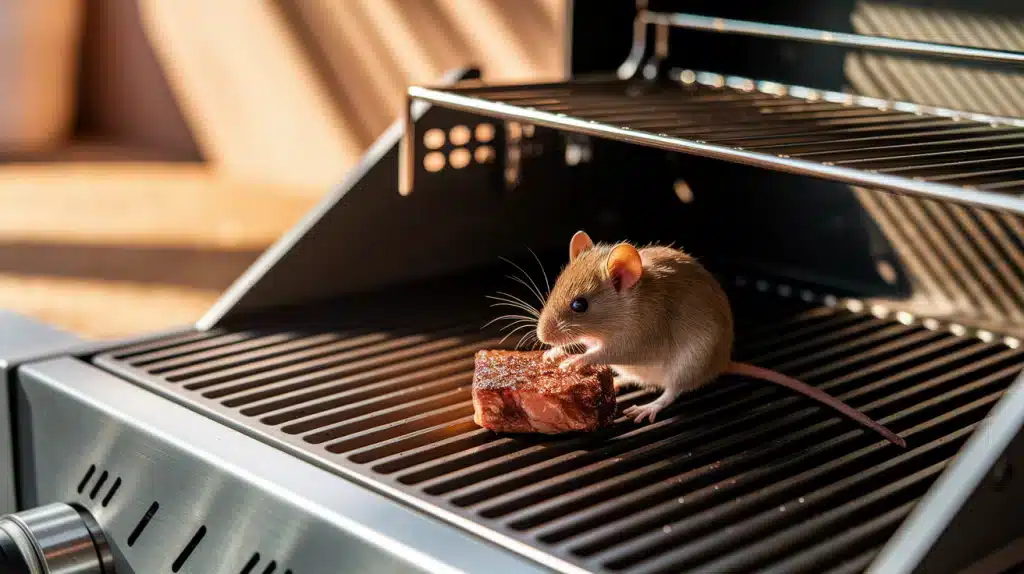
Opening your BBQ to find droppings, nesting material, or signs of rodent activity is one of the more unsettling grill discoveries a homeowner can make. It is also one of the most common — particularly in Southern California, where grills sit outdoors year-round and are often left covered and unused for weeks or months at a time.
The instinct is usually to light the grill on high and burn everything off. That instinct is wrong, and in some cases it is genuinely dangerous. This guide covers what you are likely dealing with, the health risks involved, the correct steps to take, and when professional grill cleaning is the right call.
Why Rodents and Pests Are Attracted to BBQ Grills
From a rodent's perspective, a gas grill is close to ideal shelter. It is enclosed, elevated, protected from rain, and — most importantly — it smells like food. Grease residue, carbonized food particles, drip tray buildup, and the lingering scent of previous cookouts all signal to mice, rats, and other pests that this is worth investigating.
Built-in BBQ islands with lower storage compartments are particularly susceptible. The enclosed cabinetry beneath the grill head provides a larger, more protected space than a freestanding unit, and rodents can enter through surprisingly small gaps around gas line penetrations, access door frames, and ventilation openings.
Food Sources
Grease and food residue inside the firebox and drip tray is the primary attraction. A grill that has not been professionally cleaned carries months or years of accumulated organic material that actively draws pests. Emptying and cleaning the drip tray regularly is the single most effective deterrent.
Shelter & Warmth
An enclosed grill hood with a cover over it offers exactly what rodents look for — a protected, insulated space away from predators. Grills left unused through cooler months are especially vulnerable, as rodents seek warmth during temperature drops and a covered grill retains heat longer than open outdoor surfaces.
Extended Non-Use
The longer a grill sits undisturbed, the more likely it is to attract activity. A grill used multiple times per week rarely has rodent problems — the regular heat, movement, and cleaning disrupts any attempt to establish nesting. Grills left for weeks or months are the ones we most commonly service for pest-related cleaning.
What You Might Find — and What It Means
Rodent and pest activity presents in several ways. What you find tells you something about how serious the situation is and what needs to happen next.
Droppings
The most common finding. Fresh droppings are dark and moist; older ones dry out and become lighter and crumbly. Location matters — droppings on the cooking grates, inside the firebox, or on heat plates are the most concerning because those are areas with direct food contact during cooking. Droppings only in the lower compartment suggest the activity was contained below the cooking area.
Nesting Material
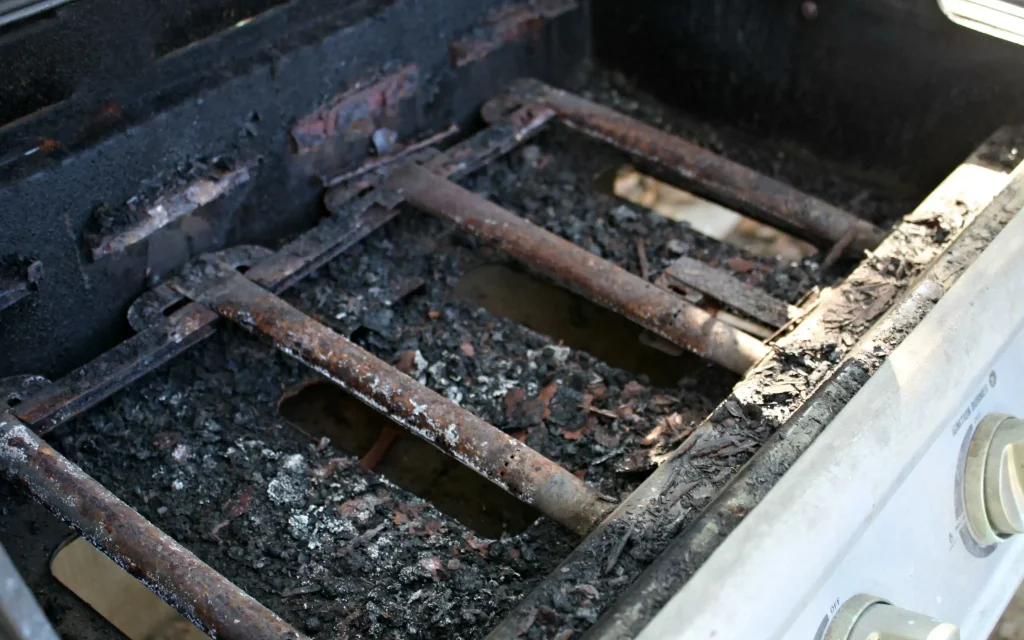
Rodents build nests from shredded paper, fabric, leaves, insulation, and — in grills — sometimes the wiring insulation around ignition components. Nesting inside the lower compartment of a built-in island, inside the grill hood, or packed into the space around burners indicates active shelter use rather than passing activity. Nesting material packed into burner tubes can completely block gas flow and create a dangerous condition if the grill is lit without clearing it first.
Chewed Wires or Components
Rodents gnaw continuously to keep their teeth worn down. Ignition wiring, gas line insulation, rubber hose components, and the ignition wiring harness are all targets. A grill that suddenly develops ignition problems after sitting unused may have had its wiring compromised by rodent activity. Chewed gas line components are a serious safety concern that requires professional inspection before the grill is operated.
Odor
A strong ammonia or musty smell when opening the grill — distinct from the usual grease smell — often indicates active or recent rodent presence even before any visual evidence is found. Trust your nose. If something smells wrong, do not light the grill before investigating further.
Spider Webs & Insects
Rodents are not the only unwanted guests. Spider webs inside burner tubes are extremely common on unused grills — certain spiders are attracted to residual gas scent and a single web can completely block a burner port. Wasp and bee nesting inside the hood or lower compartments is also a real finding, particularly in summer months.
Visible Damage
Beyond chewed wiring, look for physical damage to foam or rubber insulation around the grill body, damage to access door seals, or entry holes chewed through cabinetry panels on built-in islands. These entry points need to be addressed after cleaning to prevent recurrence — a cleaned grill with open entry points will be reinvaded.
Is It Safe to Use the Grill After Rodent Activity?
The short answer is no — not until it has been properly cleaned and inspected.
Rodent droppings, urine, and nesting material can carry pathogens including Hantavirus, Salmonella, and Leptospirosis. Cooking on a grill that has not been cleaned after rodent activity means heating those contaminants in the same enclosed space where food is being prepared. The heat of cooking does not sterilize every surface in the firebox — particularly in areas away from direct flame.
Beyond contamination, there are functional safety issues to address before relighting:
- Nesting material inside burner tubes can block gas flow and cause incomplete combustion or dangerous gas accumulation before ignition
- Chewed ignition wiring can cause ignition failure or create shorts in electronic ignition systems
- Compromised gas line components or rubber seals can create a gas leak
- A nest inside a built-in island lower compartment can be a fire hazard when the grill above reaches operating temperature
What Not to Do When You Find Rodent Evidence
Several common instincts make the situation worse. Avoid these mistakes before you have properly assessed and cleaned the grill.
Do Not Burn It Off
Turning the grill to high to burn off the contamination is not an adequate response. High heat may reduce some surface contamination on grates but does not address droppings and urine in firebox corners, lower compartments, or areas away from direct flame. Attempting to light a grill with blocked burner tubes from nesting material is also genuinely dangerous — gas can accumulate before ignition.
Do Not Dry Brush or Blow Out Droppings
Disturbing dry rodent droppings — sweeping them out with a brush, blowing with compressed air, or vacuuming without a HEPA filter — can aerosolize particles and create an inhalation risk. The CDC recommends wetting droppings with a disinfectant solution before removing them. Do not dry-clean a grill with significant rodent evidence.
Do Not Ignore Chewed Components
If you find evidence of chewing on any component — particularly wiring, gas hose material, or rubber seals — do not operate the grill until those components have been inspected and replaced. A compromised gas line is a safety issue regardless of how minor the chewing appears.
The Right Steps to Take
Step-by-Step: Handling Rodent Evidence in Your Grill
- Step 1 — Keep the grill closed and do not light it. Leave it as you found it until you are ready to handle it properly.
- Step 2 — Protect yourself before opening fully. Wear disposable gloves and a mask. Consider safety glasses if you will be working close to dried droppings.
- Step 3 — Wet down droppings and nesting material before removing. Spray with a diluted bleach solution (1 part bleach to 9 parts water) and let it soak for five minutes before carefully removing and bagging the material. This prevents aerosolization.
- Step 4 — Inspect burner tubes for blockage. Before lighting, check that burner tubes are clear of nesting material, debris, or spider webs. See our burner cleaning and repair guide for what blocked burner ports look like.
- Step 5 — Check all wiring and gas components. Inspect ignition wiring, gas hose connections, and rubber components for chewing damage. Any compromised component should be replaced before use.
- Step 6 — Perform a full deep clean. Surface cleaning is not enough. Droppings and urine trace the full path of rodent activity through the grill — a thorough professional cleaning addresses every internal component including areas not visible during a surface inspection.
- Step 7 — Identify and seal the entry point. Once clean, address how rodents got in — gaps around gas line penetrations, damaged access door seals, or open ventilation slots in built-in island cabinetry.
When to Call a Professional
For light rodent evidence — a few droppings on the grates with no other signs of activity — a careful DIY cleanup followed by a thorough cleaning may be sufficient. For anything beyond that, professional cleaning is the appropriate response.
Call a Professional When:
- Droppings are present throughout the firebox, inside burner tubes, or in lower compartments
- Nesting material is found inside the grill or island cabinetry
- There is evidence of chewed wiring, hose material, or gas components
- The grill produces an unusual odor when lit after initial cleanup
- You are not comfortable performing the safe cleanup yourself
- The grill has other issues — grease buildup, rust, ignition problems — compounding the rodent problem
What We Handle:
- Safe removal of contaminated material from all internal components
- Full deep clean of firebox, burners, heat plates, drip system, and grates
- Inspection of ignition wiring and gas components for rodent damage
- Burner tube inspection and clearing
- Honest assessment of any components needing replacement before the grill is used
- Same service whether the grill is freestanding or a built-in outdoor kitchen
How to Stop It Happening Again
Rodent activity in grills is largely preventable with the right habits. The single most effective deterrent is removing the food source — a grill with minimal grease and food residue is significantly less attractive than a neglected one.
After Every Cookout
- Empty and clean the drip tray — this is the primary food source for rodents
- Brush grates while still warm to remove food residue
- Leave the hood open briefly after cooking so heat and moisture escape before covering
Between Uses
- Inspect the grill periodically if it sits unused for more than a few weeks
- A grill cover slows entry but will not stop a motivated rodent — cleanliness matters more
- Check for any new gaps or entry points around gas line penetrations after weather events
Longer Term
- Schedule regular professional grill cleaning to remove the grease buildup that attracts pests
- Seal gaps around gas line penetrations and access door frames on built-in islands
- If rodents are a general problem around your property, treat the grill area as part of your broader pest management
Frequently Asked Questions
Can I just turn the grill on high to burn off the rodent contamination?
No — and this is the most common mistake homeowners make. High heat kills surface contamination on grates but does not reach droppings and urine in firebox corners, lower compartments, or areas away from direct flame. More importantly, if nesting material is blocking burner tubes, lighting the grill before clearing them can cause dangerous gas accumulation before ignition. Always inspect and clean before lighting after any rodent activity.
My grill ignition stopped working after sitting unused — could rodents be the cause?
Yes. Rodents frequently chew ignition wiring because the wire insulation is soft and accessible. A grill that worked perfectly before a period of non-use and now fails to ignite should be inspected for wiring damage before assuming the igniter or electrode has simply failed. We diagnose this during repair visits and replace any compromised wiring components.
Is Hantavirus a real risk from grill droppings?
Hantavirus is carried by deer mice and is transmitted primarily through inhalation of aerosolized particles from droppings, urine, and nesting material. The risk from a single casual exposure is low, but the protocol for handling any rodent contamination is the same regardless — wet the material before disturbing it, wear gloves and a mask, and bag and dispose of everything carefully. The CDC's guidance on rodent cleanup applies directly to grill contamination situations.
How do rodents get into a sealed built-in BBQ island?
Built-in islands are rarely as sealed as they appear. Gas line penetrations through the cabinetry, ventilation gaps at the base of the structure, access door frames that do not seal tightly, and gaps around plumbing or electrical penetrations all provide entry points. Mice can enter through a gap as small as a dime. After a rodent cleaning, we recommend inspecting all potential entry points and sealing them with appropriate materials — steel wool packed into gaps, followed by caulk or expanding foam, is an effective deterrent.
How soon can I use my grill after professional rodent cleaning?
Typically the same day, once the cleaning is complete and any damaged components have been addressed. After a full professional cleaning we test burner ignition and flame across the full grill, confirm there are no gas smell or flow concerns, and give you a clear indication of whether the grill is ready to use or whether any parts need to be ordered and replaced first.
Does this happen more in certain seasons?
Rodent activity in grills tends to peak during cooler months when rodents are seeking shelter and warmth — late autumn through winter is the most common period for discovering nesting. However, grills left unused for any extended period during any season are at risk. Spider web blockage in burner tubes, which creates similar ignition and performance issues, happens year-round in Southern California's outdoor environments.
Related Resources
- Mold in Your Grill — Is It Dangerous?
- Professional BBQ Grill Cleaning
- BBQ Grill Inspections
- BBQ Igniters & Ignition Systems
- BBQ Grill Burners — Cleaning, Repair & Replacement
- BBQ Grill Valves — Diagnosis & Replacement
- BBQ Grill Repair & Diagnostics
- Is It Worth Repairing a Barbecue?
- Eco-Friendly Grill Cleaning
- How Much Does Grill Cleaning Cost?
Found Rodent Evidence in Your Grill? Don't Cook On It.
SoCal Grill Masters cleans grills with rodent activity throughout Orange County and Southern California. We handle the full process — safe cleanup, thorough cleaning of all internal components, inspection for wiring and gas component damage, and an honest assessment of what needs attention before the grill is used again.