
BBQ Grill Valves: Diagnosis, Repair & Replacement
A faulty gas valve is one of the most misdiagnosed grill problems there is. Learn how valves work, what goes wrong, and why professional diagnosis matters before any part gets replaced.
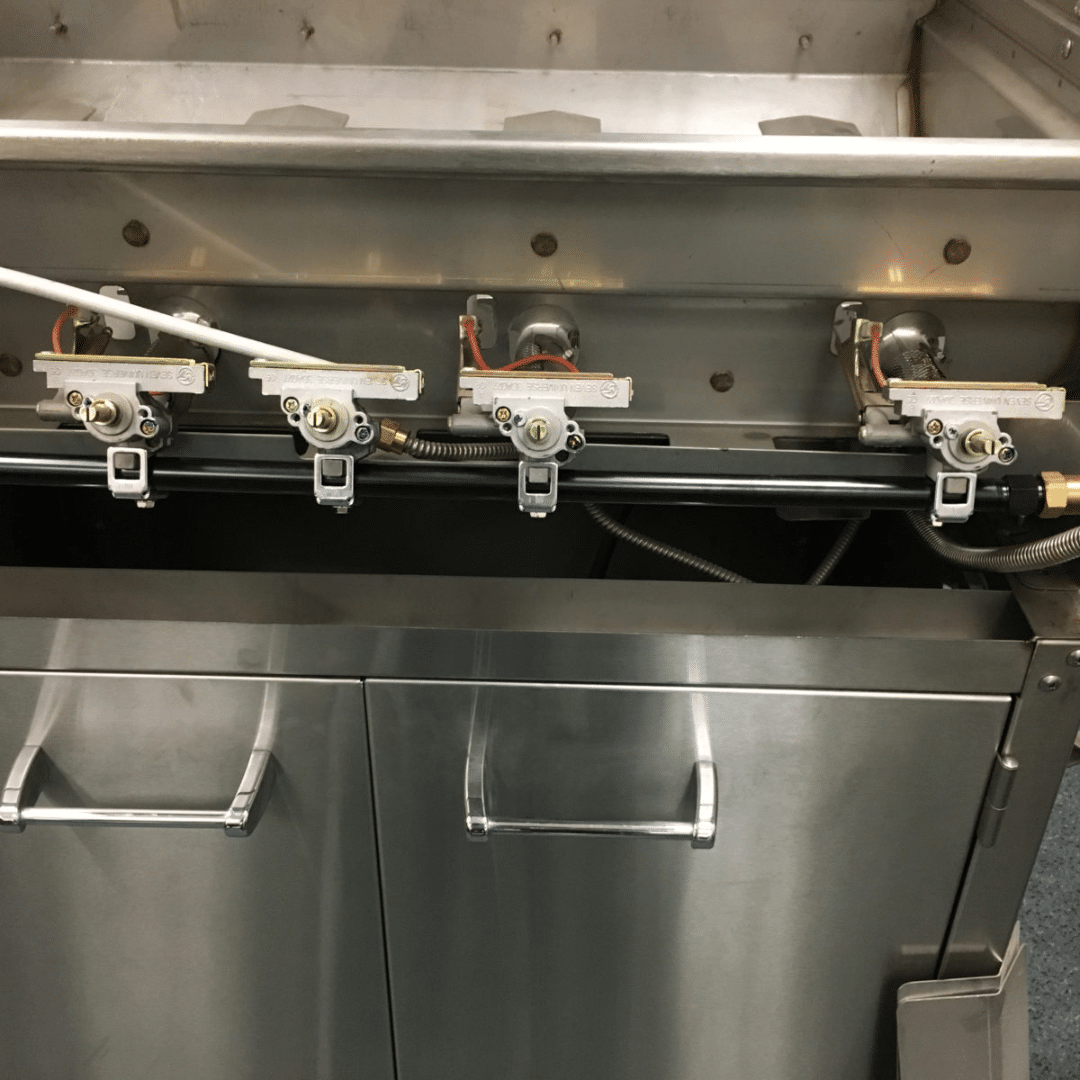
Valves Control Everything — When They Fail, the Whole Grill Suffers
Gas valves are the link between the gas supply and the burners. Every time you turn a control knob, you are operating a valve — opening and closing the gas flow to that specific burner. When a valve fails, sticks, or develops a leak, the symptoms can look like almost any other grill problem: low heat, uneven flame, a burner that won't light, or a faint gas smell that makes you nervous every time you cook.
At SoCal Grill Masters, valve diagnosis is a core part of what we do during BBQ grill repair visits. We do not guess or swap parts at random — we diagnose the specific valve or component that is actually at fault, explain what we found, and replace only what is needed. We carry valve components for a wide range of brands and service all types of gas grill valve systems on-site throughout Southern California.
How Gas Grill Valves Work
Each burner on a gas grill is controlled by its own dedicated valve. When you turn the knob, a valve stem rotates to open a port that allows gas to flow from the manifold — the main gas distribution pipe — through the valve and into the burner tube. At low settings, the port is partially open; at high, it is fully open. Turn the knob to off and the port closes completely, stopping gas flow to that burner.
The valve itself is a precisely machined component. It must seal completely when closed to prevent gas from seeping through to an unlit burner — and it must open smoothly and consistently through its full range of motion to allow the heat control your cooking depends on. When either of those functions is compromised, you have a valve problem.
Most residential gas grills use one of two valve configurations: individual valves mounted directly to a brass manifold, or a valve and manifold assembly sold as a single unit. Premium brands like Lynx, DCS, and Fire Magic use high-tolerance valve systems with tighter specifications than consumer-grade grills — which matters when sourcing replacement parts.
What Goes Wrong With BBQ Grill Valves
Sticky or Seized Valves
The most common valve complaint we hear — a knob that is difficult to turn, requires significant force to move, or is stuck completely in one position. Grease and cooking residue migrate into the valve over time and harden around the valve stem. Corrosion accelerates this in coastal environments. A seized valve that is forced with excessive pressure can damage the valve body and turn a cleaning or lubrication issue into a replacement.
Valve That Won't Fully Close
A valve that does not seal completely when turned to off allows gas to seep through to the burner continuously — creating a small pilot-like flame or a faint gas smell even with the knob in the off position. This is a genuine safety concern that should not be ignored or worked around. If you detect gas smell from a burner that is supposed to be off, the grill should not be used until the valve is inspected and replaced if necessary.
Inconsistent Flame at Specific Settings
A valve with internal wear may flow gas inconsistently at certain knob positions — producing a stable flame at high and low settings but sputtering or fluctuating in the mid-range. This kind of partial valve failure is difficult to diagnose without disassembly and is frequently misattributed to burner blockage or regulator issues. We identify it accurately during a professional repair diagnosis.
Cracked or Damaged Valve Body
Physical damage to the valve body — from impact, overtightening, or severe corrosion — can create a gas leak at the valve itself rather than at the burner connection. This type of failure requires replacement rather than repair, and is typically identified during a thorough grill inspection or during disassembly for another repair.
Knob Damage vs. Valve Damage
The control knob and the valve are separate components. A cracked, melted, or stripped knob that no longer grips the valve stem properly can mimic a valve failure — the knob turns without turning the valve underneath it. Before recommending valve replacement, we confirm whether the issue is the valve itself or simply the knob that operates it. A knob replacement is substantially less expensive.
Regulator vs. Valve Confusion
Low flame across all burners simultaneously — rather than a single burner — is almost never a valve problem. It points instead to a regulator issue, a low tank, or the bypass safety mode that propane regulators enter when they detect a rapid pressure drop. We diagnose the full gas flow system during repair visits so the correct component is identified and addressed.
Warning Signs Your Grill Valves Need Attention
Some valve problems are inconvenient. Others are genuine safety concerns. If any of the following apply, schedule a professional inspection before your next cookout:
- A control knob that is difficult or impossible to turn smoothly
- Gas smell when a burner is in the off position
- A burner that continues producing a small flame after being turned off
- Flame that fluctuates or sputters at mid-range heat settings
- A knob that spins freely without affecting the flame
- Visible corrosion, cracking, or physical damage to a valve body
- One burner that consistently runs hotter or lower than the knob setting suggests
- A control knob that became stuck after the grill was stored for an extended period
- Any unexplained gas smell during or immediately after cooking
- Grill has not been serviced or inspected in two or more years
Why Accurate Diagnosis Matters Before Replacing a Valve
Valve replacement on a premium built-in grill is not cheap. Depending on the brand and configuration, a single replacement valve or manifold assembly can be a significant parts cost — before labor. Replacing the wrong component wastes that investment entirely and leaves the actual problem unresolved.
The symptoms of a failing valve overlap significantly with symptoms of other grill problems. A burner that won't ignite could be a blocked port, a failed igniter, a faulty valve, or a safety bypass mode activated by a leaking regulator. A burner that won't fully extinguish could be a valve that doesn't close completely — or it could be residual gas clearing from the line. Only systematic diagnosis confirms which component is actually at fault.
Our technicians work through the gas system methodically — checking pressure, flow, valve function, and associated components before recommending replacement of anything. We tell you exactly what we found, what it means, and what the repair will cost before any work begins. If a knob replacement solves what looked like a valve problem, we tell you that instead of replacing the valve.
When to Service vs. When to Replace a Valve
Not every valve problem requires replacement. Some sticky or partially seized valves can be freed and serviced; others have deteriorated beyond the point where servicing is the appropriate recommendation.
Servicing May Resolve It When:
- Valve is sticky or stiff but the body is structurally intact
- Stiffness developed gradually after a period of non-use
- No gas smell is present when the valve is in the off position
- Flame fluctuation is mild and only at certain knob positions
- Issue is with the knob rather than the valve mechanism itself
Replacement Is Required When:
- Gas smell is present with the burner in the off position
- Valve body is physically cracked or corroded through
- Servicing was attempted and the valve still doesn't seal completely
- Valve stem is stripped or broken internally
- Manifold assembly has failed and requires full replacement
How Long Do BBQ Grill Valves Last?
Quality brass valve assemblies on well-maintained grills can last the life of the grill — 10 to 15 years or more — particularly on premium brands with high-tolerance components. Consumer-grade valves on entry-level grills may begin showing wear in 5 to 8 years of regular use. Several factors accelerate valve deterioration:
- Coastal salt air exposure corrodes brass valve components faster than inland environments — a meaningful consideration throughout Southern California.
- Grease migration into valve bodies during cooking builds up over years and creates the sticky resistance that eventually leads to forced operation and stem damage.
- Extended non-use followed by sudden operation is harder on valves than consistent regular use — seized components that have sat for months can be damaged when forced open.
- Cleaning practices that allow water to enter the valve area, or the use of harsh chemical degreasers around valve bodies, can accelerate internal corrosion.
Regular professional grill cleaning that addresses grease migration around valve bodies — not just the cooking surface — is the most effective way to extend valve life.
Frequently Asked Questions About BBQ Grill Valves
Is a gas smell from my grill always a valve problem?
Not always, but it is always worth investigating before using the grill again. Gas smell during cooking from a running burner is normal to a degree — you are burning gas. Gas smell when a burner is off, when the tank is connected but nothing is lit, or a persistent smell after cooking has ended are the concerning scenarios. These can involve a valve that does not seal completely, a connection leak, or a regulator issue. A professional inspection identifies the source accurately.
My control knob is stuck — can I force it?
We strongly advise against forcing a seized valve knob. The torque required to break a stuck valve free can shear the valve stem internally, turning a servicing job into a full valve replacement. If a knob will not turn with normal hand pressure, the correct approach is to have a technician assess and free the valve properly before operating the grill again.
Can I replace a grill valve myself?
On a straightforward freestanding grill with a simple individual valve configuration, a competent DIYer with the correct replacement part can perform the replacement. On built-in grills — particularly premium brands with integrated manifold assemblies — valve replacement involves disconnecting gas supply lines, working in confined spaces around cabinetry and stonework, and reassembling to spec. Professional installation is strongly recommended to ensure correct seating, leak-free connections, and safe reassembly. If you do want to source parts yourself for a DIY replacement, store.progrill.com carries replacement valves and manifold assemblies for a wide range of BBQ brands and models.
All my burners have low flame at the same time — is that a valve problem?
Almost certainly not. Simultaneous low flame across all burners points to the regulator, the tank level, or the regulator's safety bypass mode. Propane regulators have a built-in safety feature that restricts gas flow when they detect a rapid pressure drop — commonly triggered by opening the tank valve too quickly. The fix is usually as simple as turning everything off, closing the tank, waiting 30 seconds, and reopening the tank valve slowly. If that does not resolve it, a regulator issue or tank problem is the likely cause — not the valves.
How do I know if it's the knob or the valve that's faulty?
If the knob turns freely without resistance but the flame does not change, the knob's internal grip has failed and it is no longer engaging the valve stem. This is typically a knob replacement rather than a valve replacement — a much less expensive fix. If the knob turns normally but the valve behavior is erratic, the valve itself is the issue. Our technicians confirm which component is at fault during diagnosis before recommending any parts.
Do you carry valve parts for premium brands like Lynx and Fire Magic?
Yes. We stock and can source valve components for Lynx Professional, Lynx Sedona, Fire Magic, DCS, Viking, Napoleon, Weber, Lion BBQ, Blaze, Summerset, Bull Outdoor, AOG, Char-Broil, and many others. For older or discontinued models, we can typically source the correct OEM or compatible replacement part before scheduling your service visit. Contact us with your brand and model if you are unsure. You can also browse available valve parts at store.progrill.com if you prefer to source the part yourself before scheduling service.
What does valve replacement typically cost?
Cost varies significantly by brand, valve configuration, and whether it is an individual valve or a full manifold assembly. Consumer-grade individual valves are relatively affordable; premium brand manifold assemblies carry a higher parts cost. We provide a transparent estimate before any work begins — including parts and labor — so there are no surprises. See our pricing guide for general service cost context.
Related Grill Repair & Maintenance Resources
- BBQ Grill Repair & Diagnostics
- Professional BBQ Grill Cleaning
- BBQ Grill Inspections
- BBQ Grill Burners — Cleaning, Repair & Replacement
- Briquettes & Briquette Trays — When to Replace Them
- Eco-Friendly Grill Cleaning
- Mold in Your Grill — Is It Dangerous?
- Is It Worth Repairing a Barbecue?
- How Much Does Grill Cleaning Cost?
- Lynx Grill Parts & Repair
Valve Problem? We'll Diagnose It Right the First Time.
Whether your grill has a stuck knob, a gas smell concern, inconsistent flame, or a valve that won't fully close — SoCal Grill Masters diagnoses and repairs gas valve issues on-site throughout Orange County and greater Southern California. We identify exactly what is wrong before recommending any part replacement.